
Resilient Future Alliance (RFA) | Somali-led HDP Nexus Organisation
Somali-led | Locally rooted | Triple Nexus | Protection-centred | Partnership-driven

Local leadership. HDP Nexus expertise. Resilient futures.

Resilient Future Alliance (RFA) is a Somali-led, locally rooted organisation working across the Humanitarian–Development–Peace (HDP) Nexus to support forcibly displaced persons (FDPs) and marginalised communities across Somalia. We combine frontline expertise in all three pillars, community knowledge and strategic partnerships to strengthen protection, resilience, livelihoods, social cohesion, governance and durable solutions.

Preserving expertise, building resilient futures.

2026Founded in Galkayo, Mudug Region
2 statesLegally registered in Puntland (MoPEDIC) and Galmudug (MoPIED)
10Interconnected programme areas across the Triple Nexus
Somali-ledLocal leadership, local knowledge, local partnerships
Who we are

A Somali-led partner combining local knowledge and HDP Nexus expertise

RFA was established in Galkayo in 2026 in response to a clear need for stronger locally led capacity that connects humanitarian, development and peace work. The organisation brings together Somali professionals with experience across all three pillars of the Humanitarian–Development–Peace (HDP) Nexus: emergency response and protection; durable solutions, livelihoods and climate resilience; and social cohesion, conflict sensitivity and local governance.

We turn this Nexus expertise and local knowledge into practical, conflict-sensitive and accountable solutions, designed with communities and delivered through strategic partnerships. As a new organisation, RFA is deliberately building its institutional track record through partnerships with government, UN agencies, NGOs and donors.

Our values: dignity, accountability, inclusion, do no harm, localisation, evidence and community ownership.

More about RFA
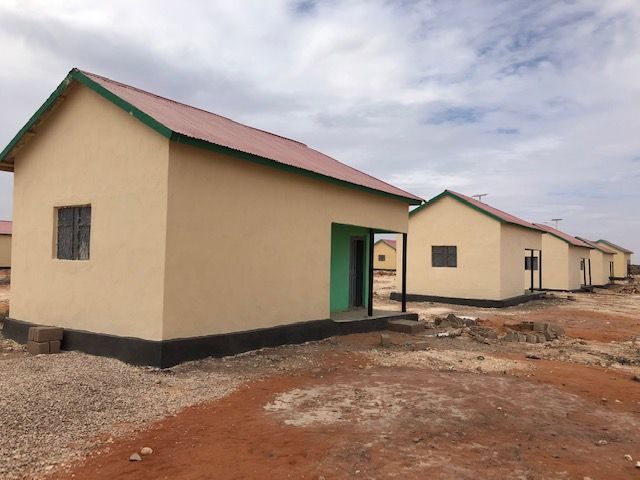
Newly built shelters in a displacement settlement in Somalia
Our approach

Working across the Triple Nexus

Displacement and vulnerability rarely have a single cause. In Galkayo and across Mudug, drought and flooding drive displacement; displacement puts pressure on scarce land, water and livelihoods; and competition over these resources can deepen tensions between communities. When humanitarian, development and peace efforts work in silos, families receive aid for years without ever leaving crisis. RFA connects all three around shared outcomes, and treats conflict sensitivity as a core discipline: no intervention is neutral, so we design every water point, cash transfer, hiring decision and partner choice to connect communities, not divide them.

Humanitarian

Protection, emergency assistance, cash, food security, child protection and referral systems that meet immediate needs with dignity.

Development

Livelihoods and economic empowerment, climate resilience, skills, durable solutions and local systems strengthening that help communities recover and stay resilient.

Peace

Social cohesion, conflict sensitivity, local dialogue and inclusive local institutions that strengthen trust between displaced and host communities and local authorities.

Illustrative example

A protection and cash response for displaced households (Humanitarian) is linked to skills and market access (Development) and to community dialogue with host communities and local authorities on services and land (Peace).

Strategic Plan 2026–2028

From Crisis to Self-Reliance

Our Strategic Plan (September 2026 to December 2028) sets out one pathway that helps displaced, drought-affected and marginalised communities move from crisis to self-reliance, and the steps RFA will take to move from establishment to delivery.

Stage 1

Stabilise

Life-saving assistance, protection, referrals, safe shelter and water.

Stage 2

Adapt

Climate-smart settlements, water management, early warning and risk reduction.

Stage 3

Connect

Dialogue, conflict resolution, youth leadership and inclusive local governance.

Stage 4

Thrive

Skills, internships, savings, enterprise, market links and durable solutions.

What we do

Our programme areas

RFA works across interconnected humanitarian, development and peace priorities. Our programme areas respond to immediate protection and basic needs while strengthening household resilience, local systems, social cohesion and pathways towards durable solutions.

Pillar 1Humanitarian Action

Meeting immediate needs with dignity, safety and choice.

Protection and solutions

Protection-centred programming for displaced, returnee, host and conflict-affected communities, including protection monitoring, referral pathways, protection analysis, prevention and response, and support to durable solutions.

Cash assistance

Cash transfers that help displaced and vulnerable households meet urgent needs with dignity and choice, informed by market and protection-risk analysis and linked to referral pathways.

Child protection

Keeping children affected by displacement and conflict safe through child-sensitive prevention, case referral and links to the services they need.

Food security

Food security responses for displaced and drought-affected households, designed to connect with livelihoods and climate resilience so short-term support leads towards recovery.

Mixed migration and mobility

Protection-sensitive analysis and programming for people on the move, including migrants, refugees and asylum seekers, with attention to risks, access to services, information needs and safe, dignified responses.

Pillar 2Development and Resilience

Helping households and communities recover, earn and stay resilient.

Livelihoods and economic empowerment

Support for displaced and vulnerable households to strengthen skills, income and market access, combined with climate and conflict analysis, financial literacy and links to local markets and services.

Climate adaptation

Adaptation support for pastoral, agro-pastoral and urban displaced communities facing cyclical climate shocks, combining climate-risk analysis, early warning, anticipatory action and locally owned resilience measures.

Durable solutions

Programming that supports IDPs and returnees towards safe, voluntary and sustainable solutions, whether return, local integration or settlement elsewhere, working with communities and local authorities on access to services, land and livelihoods.

Pillar 3Peace, Governance and Social Cohesion

Strengthening trust, inclusion and accountable local institutions.

Social cohesion and peacebuilding

Youth- and women-led dialogue and conflict-sensitive programming that strengthens trust between displaced and host communities and supports peaceful resolution of local disputes, in line with the Women, Peace and Security and Youth, Peace and Security agendas.

Governance and local capacity

Capacity strengthening with local authorities and community institutions to support inclusive, accountable local planning and services, including durable solutions frameworks.

Across all programme areas: Gender, age, disability and inclusion | Accountability to affected populations (AAP) | PSEA and safeguarding | Conflict sensitivity | Climate and environment | MEAL and evidence
How we work

Principles that guide every decision

From assessment to learning, these principles shape how we design, deliver and measure our work.

Community leadership

Communities help shape priorities, design and feedback.

Protection and do no harm

We assess risks before we act and design to avoid causing harm.

Conflict and climate sensitivity

We analyse how conflict, drought and flooding affect people and programmes.

Accountability to affected populations

We are building clear feedback and complaints channels, and we act on what we hear.

Gender, age and disability inclusion

We design so that women, girls, older people, people with disabilities and marginalised groups can take part and benefit.

Evidence and learning

We use context analysis and data to target support, adapt programmes and learn.

Local systems strengthening

We strengthen local institutions and community structures rather than replace them.

Partnership and localisation

We work with communities, authorities and partners, and invest in local capacity.

Safeguarding and PSEA

We apply zero tolerance to sexual exploitation, abuse and harassment.

Map of RFA locations in Somalia Headquarters in Galkayo; operational areas in Goldogob and Jariban (Mudug) and Dhusamareb (Galgaduud); regional office in Garoowe; federal engagement in Mogadishu; planned future interventions in Bosaso, Beledweyne, Jowhar, Baidoa and Kismayo. GalkayoHeadquarters GarooweRegional office Goldogob Jariban DhusamarebGalgaduud MogadishuFederal engagement Bosaso Beledweyne Jowhar Baidoa Kismayo Headquarters Office / operational area Planned future intervention
Where we work

Rooted in Galkayo, working across Puntland, Galmudug and elsewhere in Somalia

RFA is headquartered in Galkayo, on the Puntland–Galmudug boundary, and is legally registered in both states. From this base we work with communities and authorities on both sides of a shared displacement context, engage at federal level in Mogadishu, and plan to extend our work to other Federal Member States as funding, partnerships and security allow. Our geographic approach is guided by community need, partner capacity, access, protection risks and programme feasibility.

  • Galkayo – HeadquartersRegistered headquarters and place of founding (2026), with operations across North and South Galkayo, Mudug Region
  • GoldogobOperational area, Mudug Region
  • JaribanOperational area, Mudug Region
  • DhusamarebOperational area, Galgaduud Region (Galmudug)
  • GaroowePuntland regional and coordination office, and engagement with Puntland government institutions
  • MogadishuFederal-level engagement, including our MoU with the Office of the Special Presidential Envoy
  • Planned future interventionsBosaso and Bari (joint assessments, subject to security clearance); Beledweyne and Jowhar (Hirshabelle); Baidoa (South West State); Kismayo (Jubaland)
For donors and partners

A locally led partner for practical, evidence-based solutions

RFA brings together local leadership, expertise across the Humanitarian–Development–Peace Nexus and contextual knowledge. We work with government, communities, UN and NGO partners, donors, private sector actors and research institutions to design solutions that are accountable, scalable and grounded in local realities.

Local leadership

Somali-led governance and decision-making, grounded in the communities we serve.

HDP Nexus expertise

A UN-experienced team working across humanitarian, development and peace pillars: protection, durable solutions, livelihoods, conflict sensitivity, coordination and analysis.

Partnership and coordination

Active in Area-Based Coordination in Mudug and a member of the MEAL tool consolidation team under the MoPEDIC-led HDP Nexus Guideline and MEAL Framework. RFA holds an MoU and an endorsement letter from the Office of the Special Presidential Envoy for Migration, Returns and Children's Rights, Federal Government of Somalia.

Safeguarding and compliance

Written Code of Conduct, safeguarding and PSEA, anti-fraud and anti-corruption, financial, procurement and HR policies, and a safety and security risk management manual.

Community accountability

We are building feedback and complaints channels so that communities can shape and challenge our work.

Evidence and learning

We use context and needs analysis to guide targeting and programme design.

Our commitments

What partners and communities can expect from RFA

Dignity and do no harm

We put the safety, dignity and rights of affected people first.

Community voice

We listen to communities and show how their feedback shapes our work.

Safeguarding and PSEA

We apply zero tolerance to sexual exploitation, abuse and harassment.

Transparency

We manage resources responsibly and report openly to partners.

Inclusion

We design with attention to gender, age, disability and marginalised groups.

Evidence and learning

We base decisions on evidence and share what we learn.

Latest

News and insights

Updates, evidence and learning from RFA and our partners.

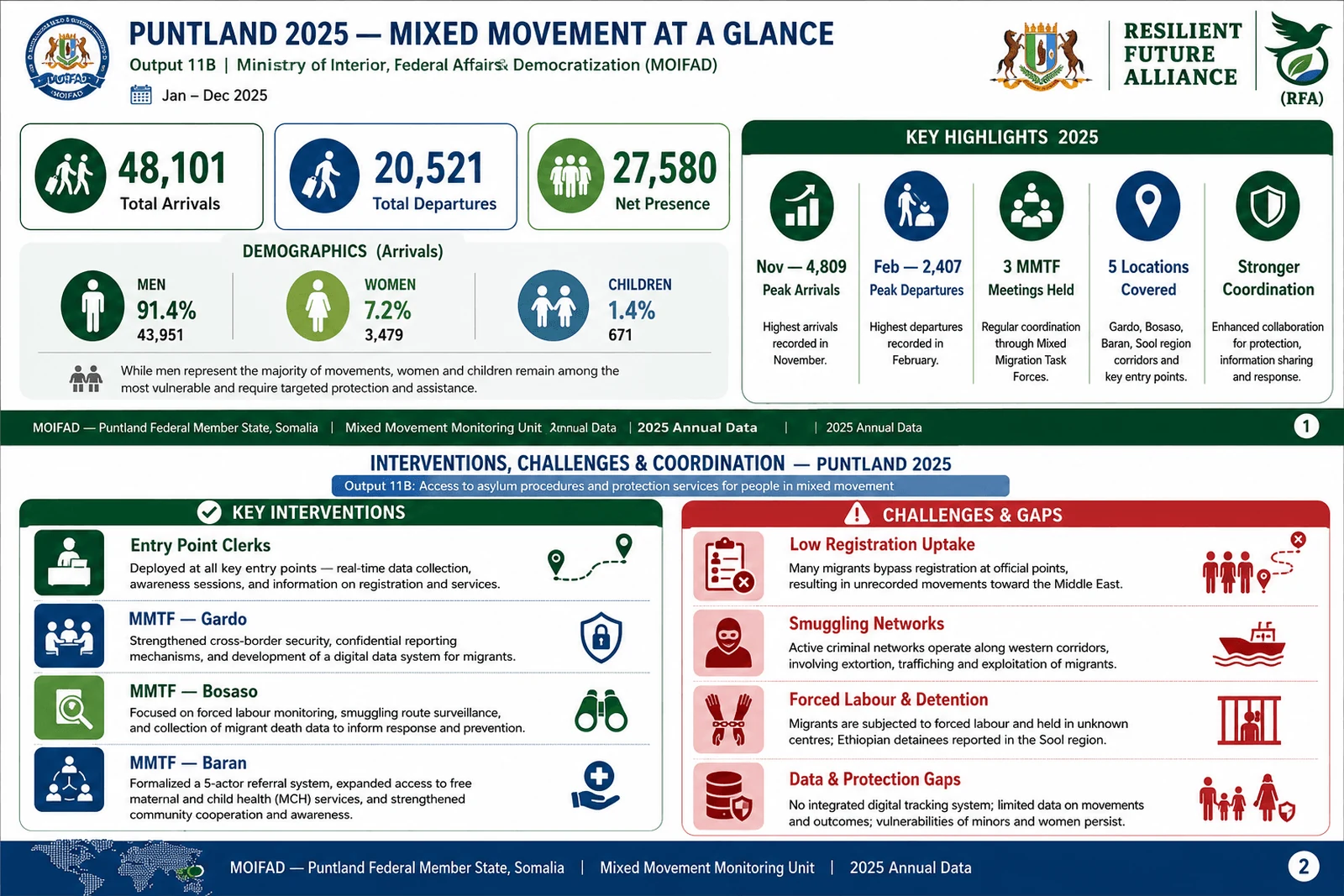
Cover of RFA's brief on mixed movement trends in 2025

Research and Evidence

Mixed movement trends, 2025

Protection risks, smuggling dynamics and data-tracking gaps affecting people on the move through Puntland. Source: MoIFAD Puntland, Mixed Movement Monitoring Unit, annual data January to December 2025.

Request the brief
New · Somalia-wide

Talent and Opportunities Network

A trusted national platform that connects young people and experienced data collectors in every region of Somalia with verified employers, and helps them build the skills to qualify for future opportunities. Free of charge, in Somali and English.

Learning Centre

Free online courses, with certificates

Everyone engaged by RFA, including staff, volunteers, interns, enumerators, consultants and candidates from the Talent and Opportunities Network, completes 4 mandatory courses, starting with Prevention of Sexual Exploitation, Abuse and Harassment (PSEAH).

  • Prevention of Sexual Exploitation, Abuse and Harassment (PSEAH)Mandatory · 60 min
  • Safeguarding and Child ProtectionMandatory · 45 min
  • Code of Conduct, Anti-Fraud and Anti-CorruptionMandatory · 45 min
  • Personal Safety and Security AwarenessMandatory · 40 min
  • HDP Nexus and Conflict Sensitivity (Do No Harm)Recommended · 40 min
  • Data Protection and ConfidentialityRecommended · 30 min
Accountable by design

Open about who we are and how we work

We are a young organisation, and we know trust has to be earned. These pages set out what we commit to, what partners can check, and how anyone can raise a concern.

Partner for resilient futures in Somalia

Whether you are a donor, government institution, UN or NGO partner, private sector actor, research institution or community organisation, we welcome partnerships that strengthen locally led solutions across the Triple Nexus.